
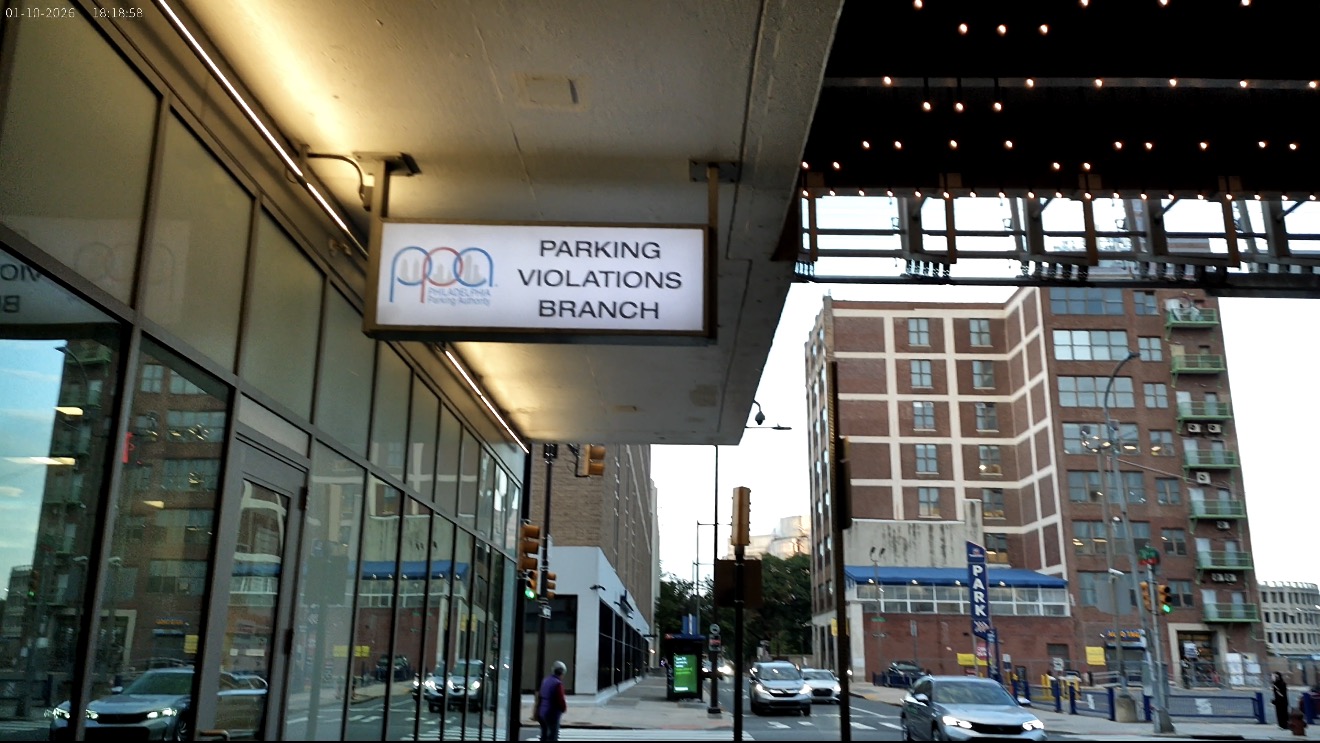
Parking has become big business. Big business! But somewhere between the meter, the parking lot, and the ticket placed on a windshield, we need to ask what has happened to the convenience of living in a city. Cities, local governments, and businesses used to provide parking as a convenience to customers and anyone seeking to access a service, product, or good. Cities welcome visitors to park and access the city’s services. Today they have abandoned that, and now parking is a service in and of itself, and city governments are in on it too. They have expanded cities’ parking authority to cash in on the parking business. And businesses have forgotten that parking is a convenience they provide to customers, and that convenience helps improve patronage.
For a driver, parking is often necessary to access something else: a restaurant, a workplace, a medical appointment, a train, or home. Yet parking has become a service in and of itself. Before you can spend money at a business, you may have to spend money finding somewhere to park. Before you can rest at home, you may have to check whether the street outside will let you stay there.
Therefore, this conversation goes to the streets through Street Vibes: Pulse of the Street, on The Neoliberal Round. Philadelphia is our starting point, but drivers in New York, Boston, Washington, D.C., and other cities should also ask: How much does it cost simply to stop?
Fern Rock, Olney, and Lehigh: park, ride—and pay
Another part of this story concerns people who park outside Center City and take the train the rest of the way. Specifically, Fern Rock, Olney, and streets along Lehigh Avenue near transit connections. Moreover, people rely on spaces in these communities to leave their cars and take transit into Center City.
Moreover, neighborhood restrictions are closing off places commuters used to use, which concerns me. A no-parking sign or a time limit can make leaving a car for a working day impossible. The choice becomes: pay somewhere else, risk a fine, or abandon the arrangement.
Are we encouraging people to take the train while making it harder for them to reach it?
The Parking Authority lists its Fern Rock Rail Station lot at 10th and Nedro Streets with 213 spaces and a $2 rate for up to 24 hours.[3] Paid commuter parking exists; that does not establish why any particular nearby street restriction was introduced. Nor am I suggesting every space around Fern Rock, Olney, or Lehigh has been closed.
I am asking which spaces have disappeared, who approved the restrictions, and whether residents and commuters were consulted. Do the changes protect residents’ access, improve safety, or steer drivers toward paid parking? The Parking Authority says its regulations are tailored to each block’s needs through work with businesses and residents.[4] Those decisions should come with explanations communities can examine.
Residents need parking, too. But squeezing residents and commuters into fewer usable spaces without alternatives leaves ordinary people carrying the cost.
My suspicion is that the parking business is reaching deeper into communities: restrict the free option, make the paid option harder to avoid, and penalize the person who cannot comply. That concern deserves investigation through specific blocks, changed signs, dates, and the accounts of people using those streets.
Private lots and the price of patronage
I also want to examine private owners acquiring properties or converting land into paid parking. What happens when the rates feel exorbitant to the people who need access? Who benefits, and what affordable options remain?
Businesses that once offered parking as part of the convenience of patronage should be part of this conversation. Where that convenience disappears, customers face another charge before buying a meal or accessing a service.
Restrictions also affect visitors to homes in Olney or near Lehigh. The Parking Authority offers residential and visitor permit programs,[5][6] but availability does not mean every household’s needs are met. What does it mean when visiting family becomes another parking calculation?
Old tickets and a long financial memory
You may also go to resolve a ticket and be asked for identifying information to locate outstanding balances. In my account, this raises questions about tickets from fifteen or twenty years ago. How far back does the system reach? How can someone verify or challenge an old charge?
The Parking Authority confirms an ownership-verification process for locating lost tickets and outstanding balances.[7] That does not establish a new universal ID requirement or the age of any particular debt.
What notice was sent? Is the record accurate? What review is available? Should people have a fair opportunity to resolve old balances without an overwhelming burden?
People may compare this with negative information eventually disappearing from credit reports. But credit-reporting timelines and the enforceability of parking balances are separate matters; one does not prove the other expires.
Does the system offer a path toward resolution, or can an old ticket become a financial shadow that follows a person indefinitely?
You live here. Now move.
Consider a resident who parks outside their home. Their house has no garage. Their apartment provides no parking space. They depend on the road because nowhere else is available.
They finally get a day off. Perhaps they are exhausted from working. Perhaps they are sick. They want to sleep, recover, or simply enjoy being home.
But the sign says street cleaning on a particular day, during particular hours. Move your car—or face a ticket.
Move it where?
That question deserves an answer before the fine arrives.
Philadelphia’s 2026 residential mechanical street-cleaning season runs from April 6 through October 29. Ticket enforcement began April 20. On designated streets, restrictions follow posted, staggered two-hour windows between 9 a.m. and 3 p.m., Monday through Thursday. These requirements apply to selected streets, not every residential block.[1][2]
The city says moving vehicles allows sweepers to reach the curb. It also acknowledges that densely populated neighborhoods have scarce parking and that relocating cars can be difficult.[1]
The city’s own explanation has a problem: residents must relocate vehicles in neighborhoods where finding somewhere else to park may be hard.
A sign establishes a restriction. It does not create another space.
A clean street should not come at the expense of an exhausted resident
Residents want clean streets. We live with the litter. We walk past it, sweep it, and pick it up. Those who maintain the frontage of their homes know that keeping a block clean requires attention throughout the week—from Tuesday to Monday, not merely during one scheduled visit.
The city’s own description says mechanical cleaning supplements community cleaning efforts.[1] That partnership should also mean listening to the people whose daily lives must bend around the schedule.
When litter returns the next day, a resident may reasonably ask: What lasting improvement did this disruption deliver? Was the block actually cleaned? Was the service dependable? And if I could not move my car because I was ill, why was a fine the answer?
A missed parking window does not tell the whole story of a person’s life.
For someone recovering from illness, sleeping after a night shift, caring for a child, or living with limited mobility, moving a vehicle can demand far more than the few minutes an enforcement schedule appears to assume.
To me, a system that responds to those circumstances with punishment, without a workable alternative, is draconian. The burden falls especially hard on residents who cannot afford private parking.
When convenience becomes a commodity
The larger concern reaches beyond street cleaning.
Parking can help people access businesses and services. When that access becomes a separate expense, it changes the relationship between the city and the people using it. A customer must budget for the purchase and the parking. A visitor must calculate how long they can stay. A resident must organize rest around the risk of a ticket.
You invite somebody over, and suddenly the conversation includes: “How long can you stay before your car becomes more expensive than the visit?”
Our neighborhoods should have room for ordinary life.
Loading zones, time limits, meters, and no-parking areas can serve legitimate purposes. But we should examine each restriction for its effect on nearby residents. Who benefits? Who loses access? What alternatives exist?
Residents already contribute through taxes to roads and public services. Taxes do not guarantee exclusive ownership of the curb outside a home. Still, paying residents deserve a government that takes their practical needs seriously.
Is the city serving residents—or collecting from them?
My concern is that parking enforcement can become a revenue opportunity built around people’s limited choices. When the instruction is “move,” the alternative is unclear, and the consequence is a fine, the system can feel designed to collect.
That is my criticism of the policy’s effect. Establishing that revenue is its primary purpose would require evidence about budgets, enforcement decisions, and how the money is used. The city states that its cleaning program aims to reduce litter and improve neighborhood conditions.[1]
Then let us judge it by those outcomes.
How clean are the streets? How reliably are they serviced? How many residents receive tickets? What happens when cleaning is canceled? What accommodation is available for illness or disability? Where can residents park without another charge?
A fairer approach would pair restrictions with practical relocation options, clear notices, dependable service, and reasonable ways to address hardship. Residents should also be able to see whether enforcement is delivering cleaner blocks or simply more penalties.
We will take these questions to drivers and residents through Street Vibes: Pulse of the Street.
Because a city is a place where people work, visit, recover, and come home. Its policies should make those lives possible.
Before placing another ticket on a windshield, answer the question:
Where are we supposed to go?
Sources
[3] PPA, “Fern Rock Rail Station Lot.” https://philapark.org/fern-rock-rail-station-lot/
[4] PPA, “Street Parking.” https://philapark.org/streetparking/
[5] PPA, “Residential Parking Permit.” https://philapark.org/residential-parking-permit/
[6] PPA, “Parking for Visitors.” https://philapark.org/2024/03/parking-for-visitors/
[7] PPA, “Unprocessed & Lost Ticket Information.” https://philapark.org/2022/03/lost-ticket-information/
[1] City of Philadelphia, Department of Sanitation. “Enforcement Period for the City’s Mechanical Cleaning Program Begins on Monday, April 20.” April 17, 2026. https://www.phila.gov/2026-04-17-enforcement-period-for-the-citys-mechanical-cleaning-program-begins-on-monday-april-20/
[2] City of Philadelphia. “Cleaning schedule.” Mechanical Street Cleaning. https://www.phila.gov/programs/mechanical-street-cleaning/cleaning-schedule/
By Renaldo McKenzie
The Neoliberal Post and Journals | Opinion
Email us at info@theneoliberal,.com or [email protected]