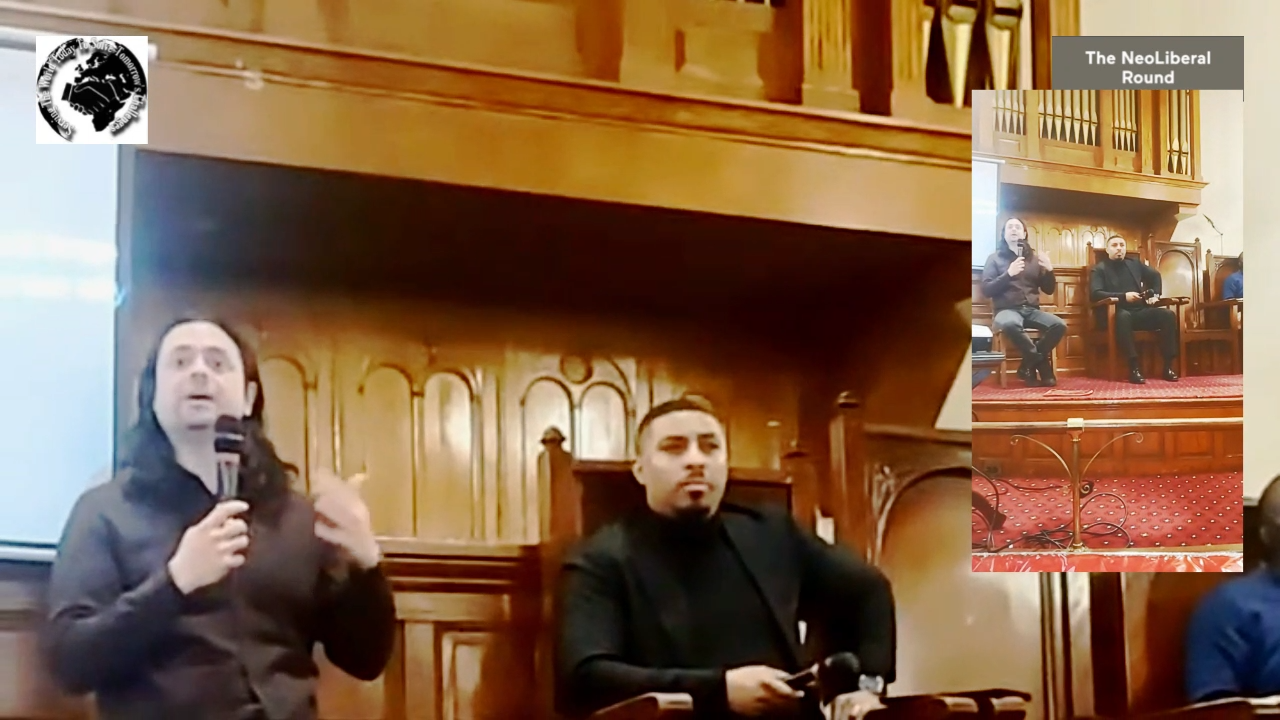
Yesterday, P.O.W.E.R convened a housing affordability assembly at Mother Bethel A.M.E. Church. The sanctuary was full—overflowing, really—with more than 1,000 people from across Philadelphia, representing churches, faith communities, and concerned residents gathered under one shared anxiety: a city in the grip of a housing crisis.
Rising rents. Shrinking housing stock. A looming reduction in federal funding as Washington signals cuts to already strained city budgets. The moment demanded boldness.
Several elected officials were present. Isaiah Thomas attended, along with one at-large City Council member and a representative for a district council member, all there to listen, respond, and engage. State Senator Sharif Street was also in attendance, though he did not sit on the panel.
And yet—despite the size of the crowd and the urgency of the issue—the conference, in my estimation, offered no real solutions. What we heard instead were recycled ideas, familiar refrains, and policy comfort food that no longer nourishes a city this hungry.
First, there was the call for nonprofits—particularly large institutions like the University of Pennsylvania—to do more, or to pay taxes. But nonprofits are already doing a great deal. They employ a significant portion of the city’s workforce—workers who pay taxes, rent homes, and sustain the local economy. To suggest nonprofits simply “do more” ignores both their existing contributions and the structural limits of that sector.
Second, a council member suggested taxing billionaires more. This has become a political cliché—emotionally satisfying, rhetorically popular, and practically unproductive. In reality, such policies often accelerate capital flight, pushing wealth—and investment—out of the city. At the same time, Philadelphia maintains a large social welfare population. That contradiction cannot be ignored. How do we justify ever-higher taxes on a shrinking base while relying on redistribution without first expanding the economic pie?
If anything, the city should be working with billionaires and high-net-worth investors—creating incentives, credits, and opportunities for them to invest more deeply in Philadelphia. The city lacks a robust ecosystem of lucrative business investment. Outside of Comcast (Xfinity), Philadelphia has very few major corporations anchoring its economy. That should concern us.

Third, Philadelphia is in direct competition with Delaware, a neighboring state that offers business-friendly tax structures and aggressive incentives. Businesses notice this. Investors notice this. Capital moves accordingly. If Philadelphia wants to win, it must compete—by reducing taxes, waiving fees, and offering meaningful credits to attract for-profit businesses and corporations. That is how cities grow revenue sustainably, not by squeezing the same sources harder.
Finally, one of the most striking revelations was that the city reportedly has over one billion dollars sitting in reserve. Why not deploy financial expertise to grow that money? Why not invest a portion of it in high-yield instruments—government bonds, fixed annuities, or other secure investment vehicles—to generate returns that can fund housing initiatives long-term? Cities invest. Universities invest. Pension funds invest. Why shouldn’t Philadelphia?
Instead, the meeting largely circled back to asking those already doing much to do even more, while calling for new policies and bills that repeat old thinking. There were no out-of-the-box ideas, no structural economic reimagining, no serious engagement with how capital is created, attracted, and sustained.
Philadelphia does not have a housing problem alone—it has an investment problem. Until we are willing to confront that honestly, assemblies will remain full, speeches will remain passionate, and solutions will remain painfully absent.
The crisis deserves better. The people deserve better. And the city—this city of grit, history, and possibility—can do better, if it dares to think differently.