
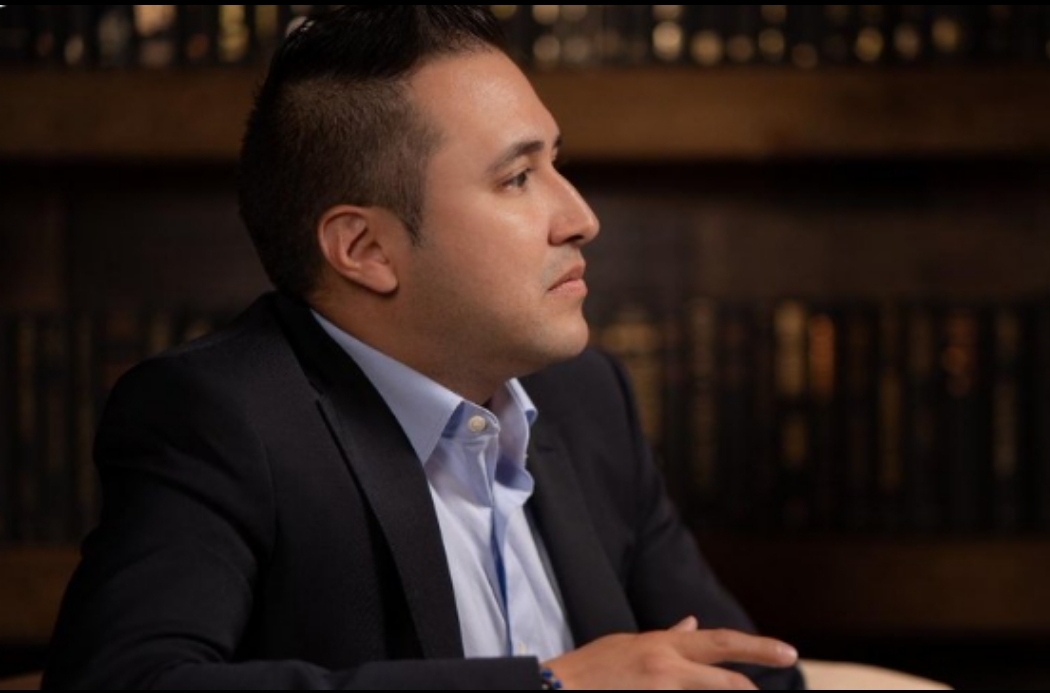
John Anthony Castro, the former presidential candidate and litigant who challenged Donald Trump under Section 3 of the 14th Amendment, says his federal appeal remains active before the U.S. Court of Appeals for the Fifth Circuit and that a decision could come by the end of June or before July 1.
Speaking by phone from FCI Pollock Camp in Louisiana, where he is currently incarcerated, Castro pushed back against online claims that his appeal had already been denied or overturned. He said those claims are false and urged the public to consult the court docket directly through PACER, the federal judiciary’s electronic records system.
“The case is still pending. It’s active. There’s been no decision yet,” Castro said, describing what he called a wave of misinformation surrounding his legal status.
Castro said the case is now in what he described as its “final phase.” According to him, briefing has been completed, including his opening brief, the government’s response, and his final reply, and the matter is now before a three-judge panel of the Fifth Circuit.
“Generally once the panel has the briefs, it’s usually about 60 to 90 days after that that the opinion and judgment is officially published,” Castro said. Based on that timeline, he said he expects a decision sometime this summer.
The appeal follows Castro’s conviction and sentence of 188 months in prison, which he described as “the highest tax sentence in the last 45 years.” Castro argued that the sentence was meant to send a political message because of his legal actions against Trump. That claim has not been independently adjudicated in the interview and reflects Castro’s own position.
A major part of Castro’s argument centers on his request for release pending appeal. He contends that both the district court and the Fifth Circuit denied that request without providing written reasons, which he says violates Federal Rule of Appellate Procedure 9(a). According to Castro, the rule requires a court denying release to state its reasons in writing.
He said he has since gone back to the district court and filed an objection and motion demanding a statement of reasons from the judge, but that no ruling has yet been issued. Castro also claimed that the Department of Justice did not oppose his initial motion for release, which he characterized as highly unusual and legally significant.
Castro’s broader appeal alleges multiple forms of prosecutorial and procedural misconduct. He claimed that before trial, fake stipulations were inserted into the record and that his attorney’s signature was forged. He also alleged that during trial, a witness was pressured into giving false testimony. In addition, Castro claimed that after trial, prosecutors engaged in improper communications with the court reporter and influenced the transcript. These are serious allegations, but they remain Castro’s claims as presented in the interview and have not been proven in this report.
Still, Castro said those issues are at the core of his appeal and that his filings expose what he described as a trial “rigged” before, during, and after the proceedings.
He also pointed to a subsequent career move by prosecutor PJ Meitl, who Castro said left the Department of Justice for a high-paying private-sector position, which Castro believes raises further questions. Castro additionally referenced political donations by interests he says are connected to Trump. Those assertions were made by Castro during the interview and would require independent verification beyond his account.
Beyond the legal battle, Castro reflected on the personal cost of his incarceration. He said AI Tax, the company he led, has collapsed. He added, however, that his wife and children are doing well and have adjusted to the circumstances.
“My wife and kids are doing great. They’ve adapted, thank God, to the situation,” Castro said.
He also said his time in prison has deepened his faith and reshaped his sense of purpose. If released, Castro said he sees himself moving toward ministry and pro bono legal work, especially in service of people who have experienced injustice.
“I’ve found a new path,” he said. “I definitely see myself pursuing work in ministry.”
Castro confirmed that he is being held at a minimum-security federal prison camp and said conditions there are manageable. He also said he is permitted to receive visitors, subject to approval through the prison’s visitation process, and that phone interviews remain possible.
Castro has been followed by The Neoliberal Round Podcast since his presidential bid and his earlier legal challenges involving the Federal Election Commission and Donald Trump. His prosecution and incarceration interrupted both his campaign and his lawsuit, but he now says the appeal has brought his case to a decisive stage.
For now, Castro says he is waiting for the Fifth Circuit to rule, while continuing to press the district court for a written explanation of why he was denied release pending appeal.
Whether the appellate panel agrees with his claims remains to be seen. But according to Castro, the case is very much alive, and the summer may determine what comes next.
By Renaldo McKenzie
The Neoliberal Journals
Renaldo is author of Neoliberalism, Globalization, Income Inequality, Poverty and Resistance available at https://store.theneoliberal.com
Email us: [email protected]
Call us: 1-445-260-9198
Donate to us at: https://donate.stripe.com/7sYcN48uybAA2OEb9V93y06
